Ad

Friday, October 10, 2025

No need for the Minister to be dancing around the cost - Governor Makinde calls out Umahi over coastal highway

No need for the Minister to be dancing around the cost - Governor Makinde calls out Umahi over coastal highway

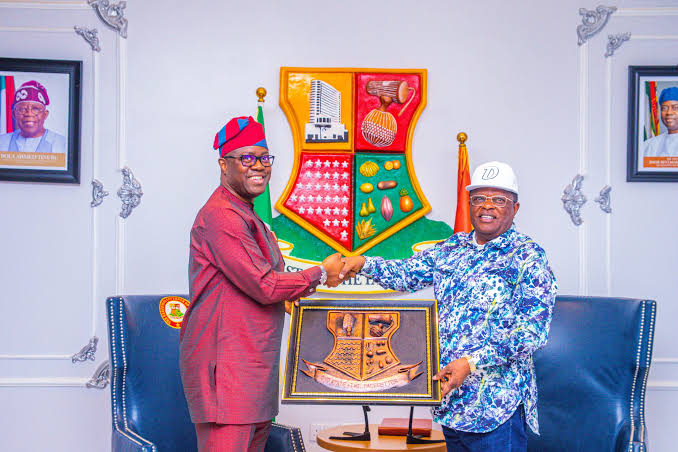
Oyo State Governor Seyi Makinde has weighed in on the controversy surrounding the Lagos-Calabar Coastal Highway, criticising the Minister of Works, David Umahi, for what he described as evasiveness over the project’s true cost.

Makinde addressed the issue while speaking at a public event, saying there was “no need for the Minister to be dancing around the cost” of the project. His comments came days after Umahi engaged in a heated on-air exchange with Arise TV journalist Rufai Oseni, who had pressed the minister to disclose the cost per kilometre of the 700-kilometre highway.

During the interview, Umahi appeared visibly agitated by the question, declaring himself “a professor of practice in engineering” and dismissing Oseni’s inquiry as “elementary.” He argued that road costs could not be calculated uniformly because each kilometre presented unique engineering challenges.  

“These are elementary questions,” Umahi said during the live broadcast. “The money is meant for the project, and it will be paid according to the work done. The prices are different — the next kilometre is different from the next kilometre. Keep quiet and stop saying what you don’t know. I’m a professor in this field. You don’t understand anything.”

Oseni, refusing to back down, replied, “Minister, it’s alright. Keep dignifying yourself, and let the world know who you truly are.”

Weighing in on the exchange, Governor Makinde sided with the journalist, insisting that Nigerians have a right to know the average cost of such a massive public project.

“They asked a minister how much the coastal road is, and then you (Umahi) are dancing around and saying that the next kilometre is different from the next kilometre. Then what is the average cost?” Makinde asked.

Makinde then compared the coastal highway to road projects completed under his osn administration saying; “When we did the Oyo to Iseyin road, it was about ₦9.99 billion — almost ₦10 billion — for about 34 or 35 kilometres. That’s an average of ₦238 million per kilometre,” he said.

“When we did Iseyin to Ogbomoso, that was 76 kilometres at about ₦43 billion, averaging ₦500 million per kilometre. And that project included two bridges — one over the Ogun River and another at the Ogbomoso end.”

Makinde’s comments have reignited debate over the transparency and cost structure of the Lagos-Calabar Coastal Highway, one of Nigeria’s most ambitious infrastructure projects, stretching across nine states with two additional spurs leading northward.

The project, awarded to Hitech Construction Company Limited, was officially flagged off in 2024 by President Bola Tinubu, with the first phase comprising 47.47 kilometres of dual carriageway constructed with concrete pavement.

In a statement issued at the time by Umahi’s media aide, Uchenna Orji, the Minister stressed that all contractors handling federal road projects must deliver within record time, warning that delays would not be tolerated and that the government would not accept cost variations once mobilisation had been paid.

Russia launches massive attack on Ukrainian energy grid

Russia launches massive attack on Ukrainian energy grid

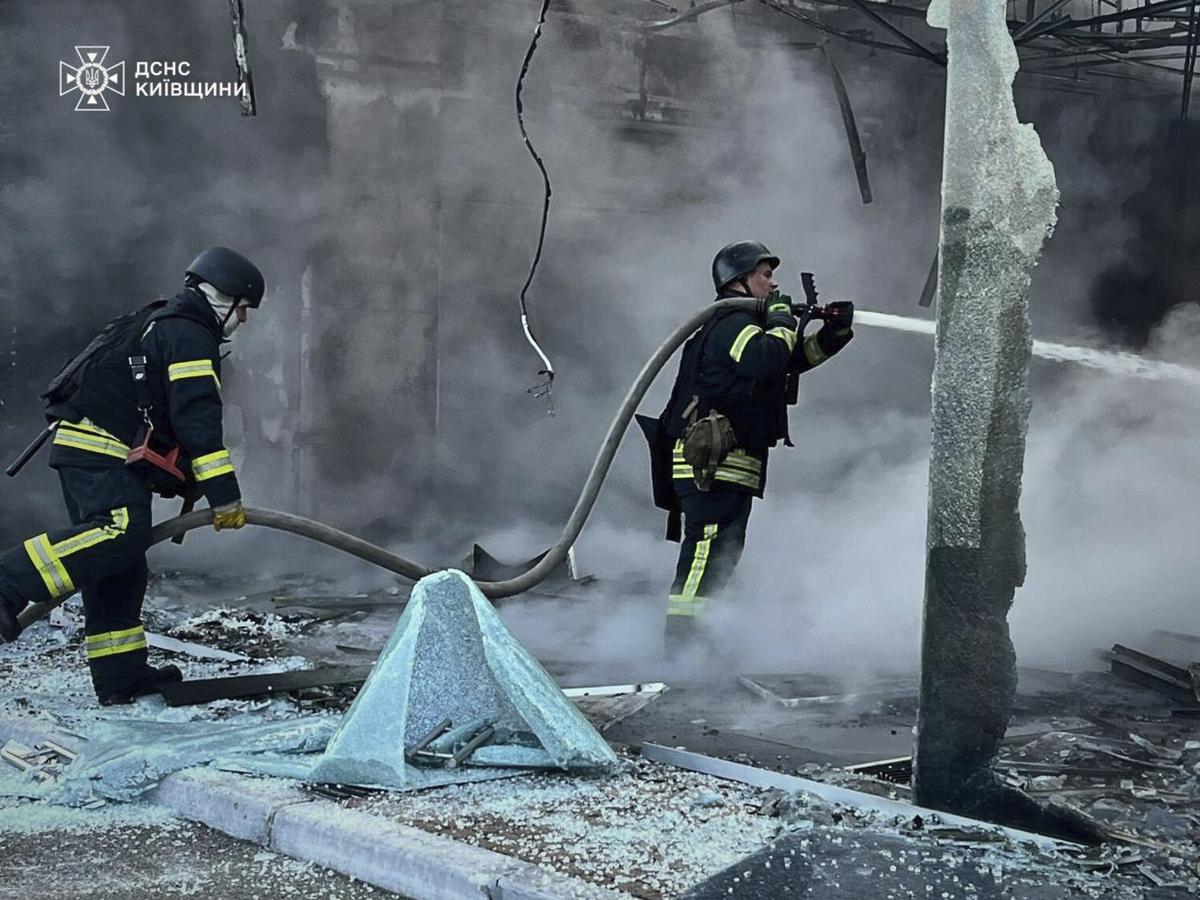
Russia conducted a "massive attack" on Ukraine's energy infrastructure early Friday, October 10 according to top Ukrainian officials. The widespread strikes left parts of the capital, Kyiv, and several other regions without power.

Ukrainian President Volodymyr Zelensky condemned the action as a "cynical and calculated attack," stating that Russia launched "more than 450 drones and over 30 missiles" aimed at civilian and energy infrastructure. He stressed that these attacks are Russia's tactic to deprive Ukrainians of power and heat as the bitter winter season approaches, with the goal being "to leave us in darkness, without water and heat."

Ukrainian officials report the attacks on energy facilities, including gas production and distribution, have been almost daily since late September. The latest offensive caused significant damage and casualties across the country. A 7-year-old boy was killed in a strike on the southeastern city of Zaporizhzhia, and dozens of people were injured, including at least 12 in Kyiv.

The attack resulted in extensive power cuts in multiple regions. In the Kyiv region, approximately 28,000 families in the Brovary and Boryspil districts lost electricity, according to Governor Mykola Kalashnik, while the left bank of the capital also experienced power and water supply issues.

Further east, the Poltava region saw more than 16,500 households and 800 businesses without power. Other affected areas included Kharkiv, Dnipro, and Zaporizhzhia.

The country's largest private energy producer, DTEK Group, reported that its stations were specifically targeted, the third such strike in one week with the attack severely damaging equipment and injuring an energy worker.

Emergency services documented the devastation, sharing video of firefighters battling a massive blaze in Kyiv and helping residents to safety. Energy Minister Svitlana Grynchuk assured the public that workers are taking all necessary steps to minimize the negative consequences of the attack.

Wednesday, October 8, 2025

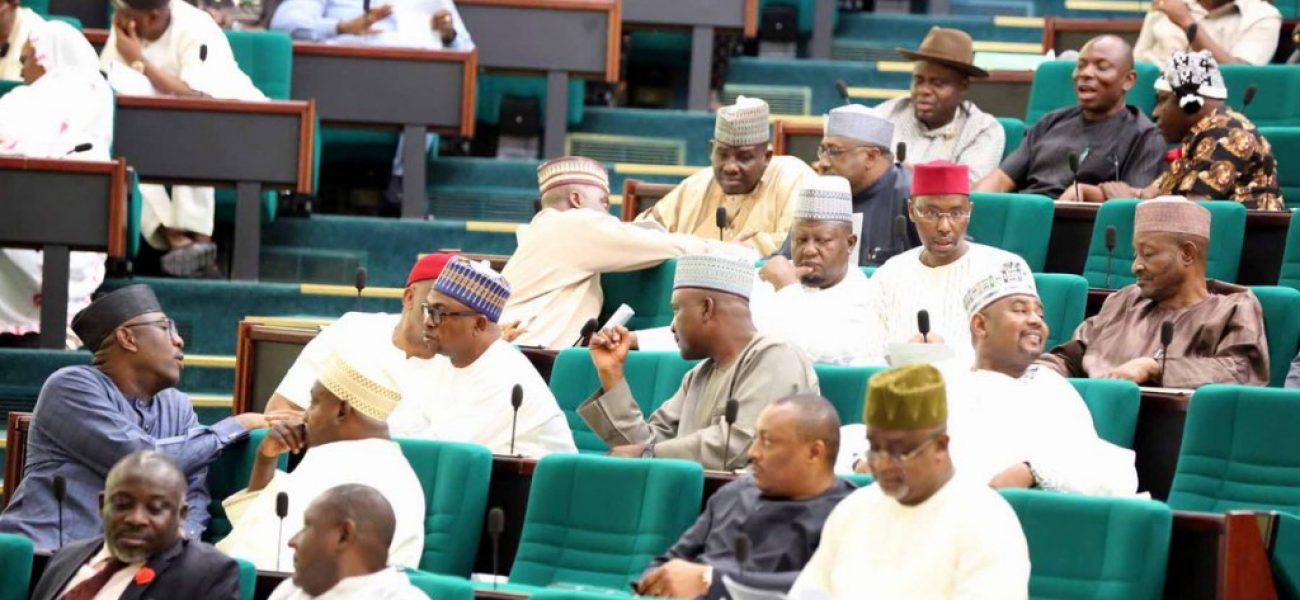
House of reps condemns US bill alleging genocide against Christians in Nigeria

House of reps condemns US bill alleging genocide against Christians in Nigeria

The House of Representatives has strongly condemned a bill proposed by United States lawmakers that seeks to hold Nigerian officials accountable for allegedly “facilitating the mass murder of Christians.”

During Wednesday’s plenary session, the lower chamber passed a resolution rejecting the allegations, stressing that there is no state-sponsored persecution of Christians in Nigeria. The motion was sponsored by Deputy Speaker Benjamin Kalu alongside 359 lawmakers.

The bill in question, titled the “Nigeria Religious Freedom Accountability Act of 2025,” was introduced by U.S. Senator Ted Cruz. It calls for targeted sanctions against Nigerian government officials accused of enforcing Sharia and blasphemy laws, urges the U.S. Secretary of State to designate Nigeria as a “country of particular concern,” and maintains that Boko Haram and ISIS-West Africa should remain listed as entities of particular concern.

The proposed legislation follows recurring international claims that Nigerian Christians face systematic persecution, a narrative the Nigerian government has consistently rejected.

Moving the motion, Kalu said that while the U.S. Commission on International Religious Freedom (USCIRF) recently recommended Nigeria for designation as a country of concern, the claims fail to reflect the true situation. “Nigeria’s constitution guarantees freedom of thought, conscience, and religion,” he said, emphasizing that “successive administrations, security agencies, faith leaders, and civil society continue to take measures to protect all worshippers and prosecute offenders.”

He argued that insecurity in Nigeria stems from complex and multi-dimensional issues — including insurgency, banditry, farmer-herder conflicts, separatist violence, and communal disputes — which affect citizens across all faiths. Kalu warned that “external legislative actions based on incomplete or decontextualised assessments risk undermining Nigeria’s sovereignty, misrepresenting facts, straining strategic relations, and unintentionally emboldening violent actors.”

Contributing to the debate, Majority Leader Julius Ihonvbere noted that the U.S. bill has already passed its second reading in the Senate, warning that its passage could damage Nigeria’s reputation and cost significant resources to reverse. “Nigerians are facing economic, social, and security challengesnot religious persecution,” he said, describing the move as a “deliberate attempt to undermine Nigeria’s democratic progress.”

Oluwole Oke, Chair of the House Committee on Foreign Affairs, criticized the U.S. Senate for excluding Nigerian officials and diplomatic representatives from the bill’s public hearing, describing it as “a deliberate attempt to damage Nigeria’s image.” Similarly, Billy Osawaru, representing Edo State, called it a case of “global politics” and lamented that Nigeria currently lacks an ambassador to the United States who could have engaged with the American lawmakers.

Following the debate, the House rejected narratives portraying Nigeria’s security challenges as a religious conflict or as state-sponsored persecution and reaffirmed the country’s commitment to constitutional freedom of religion and belief.

The parliament directed the Ministry of Foreign Affairs and the Nigerian Embassy in Washington, D.C. to lodge a formal complaint at the United Nations and urged U.S. legislators to consider a joint Nigeria-U.S. fact-finding and dialogue mission.

The Committee on Legislative Compliance was tasked with ensuring the execution of the resolutions and reporting back to the House within 28 days.

No more negotiation, ransom payment to terrorists — Defence Minister, Gen. Musa

Nigeria’s Minister of Defence, General Christopher Musa, has declared that there should be no negotiation or ransom payment to terrorists, i...